













Unfortunately, Internet Explorer is an outdated browser and we do not currently support it.
To have the best browsing experience, please use Google Chrome, Firefox, Microsoft Edge or Safari.
We use cookies to improve your experience on our website. By continuing to browse this website, you agree to our use of cookies. For more information, please refer to our privacy policy.

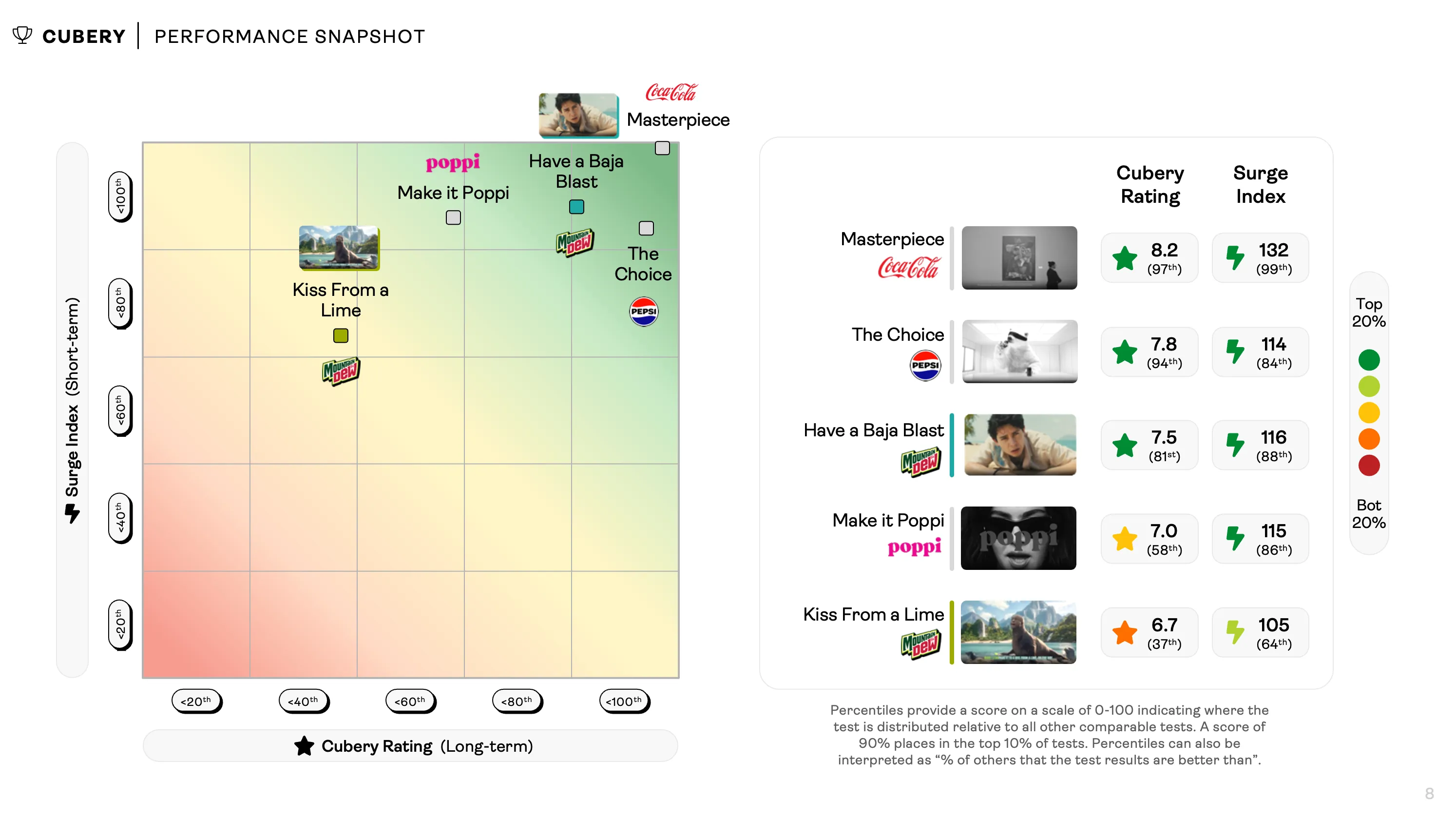
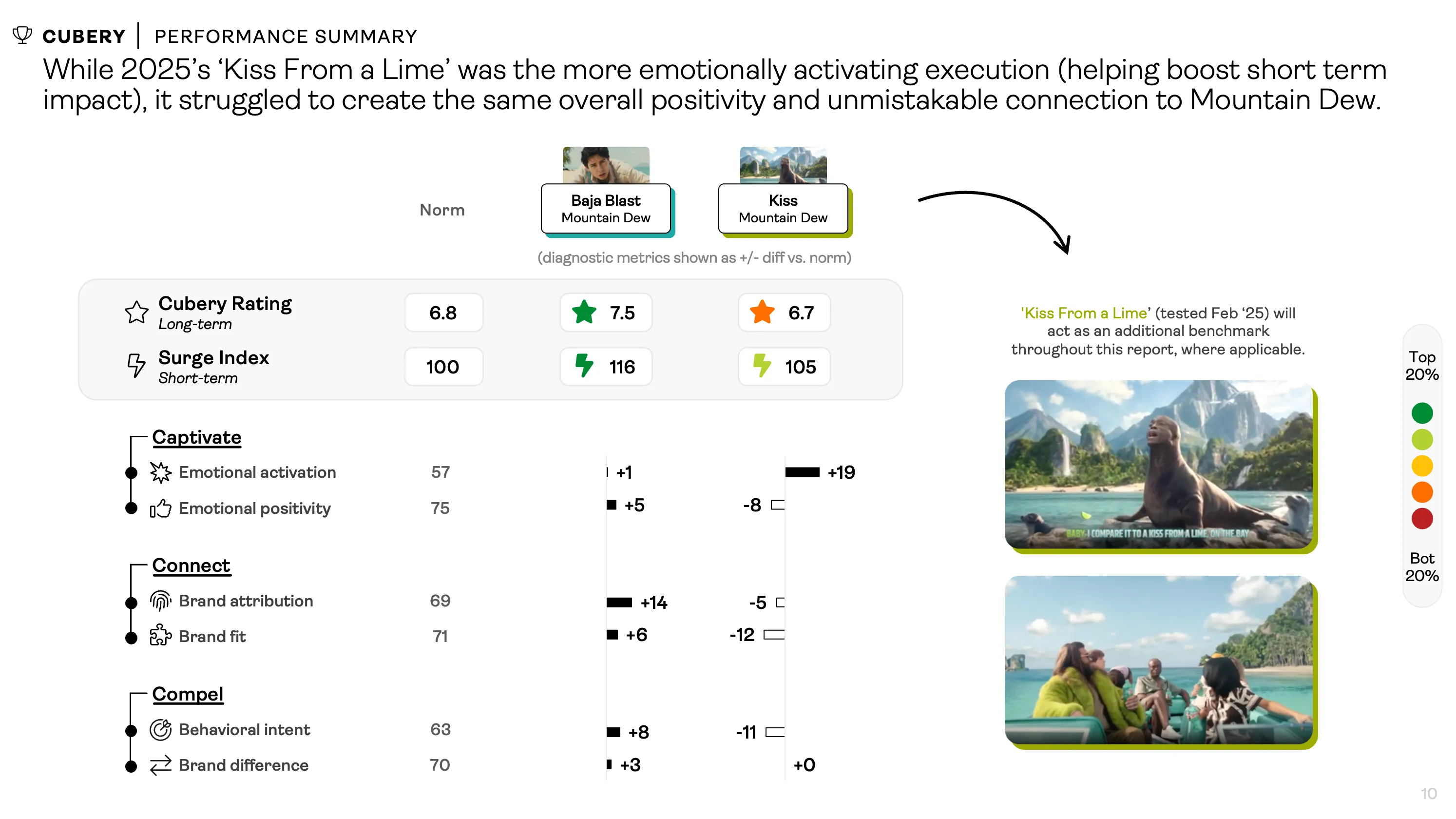
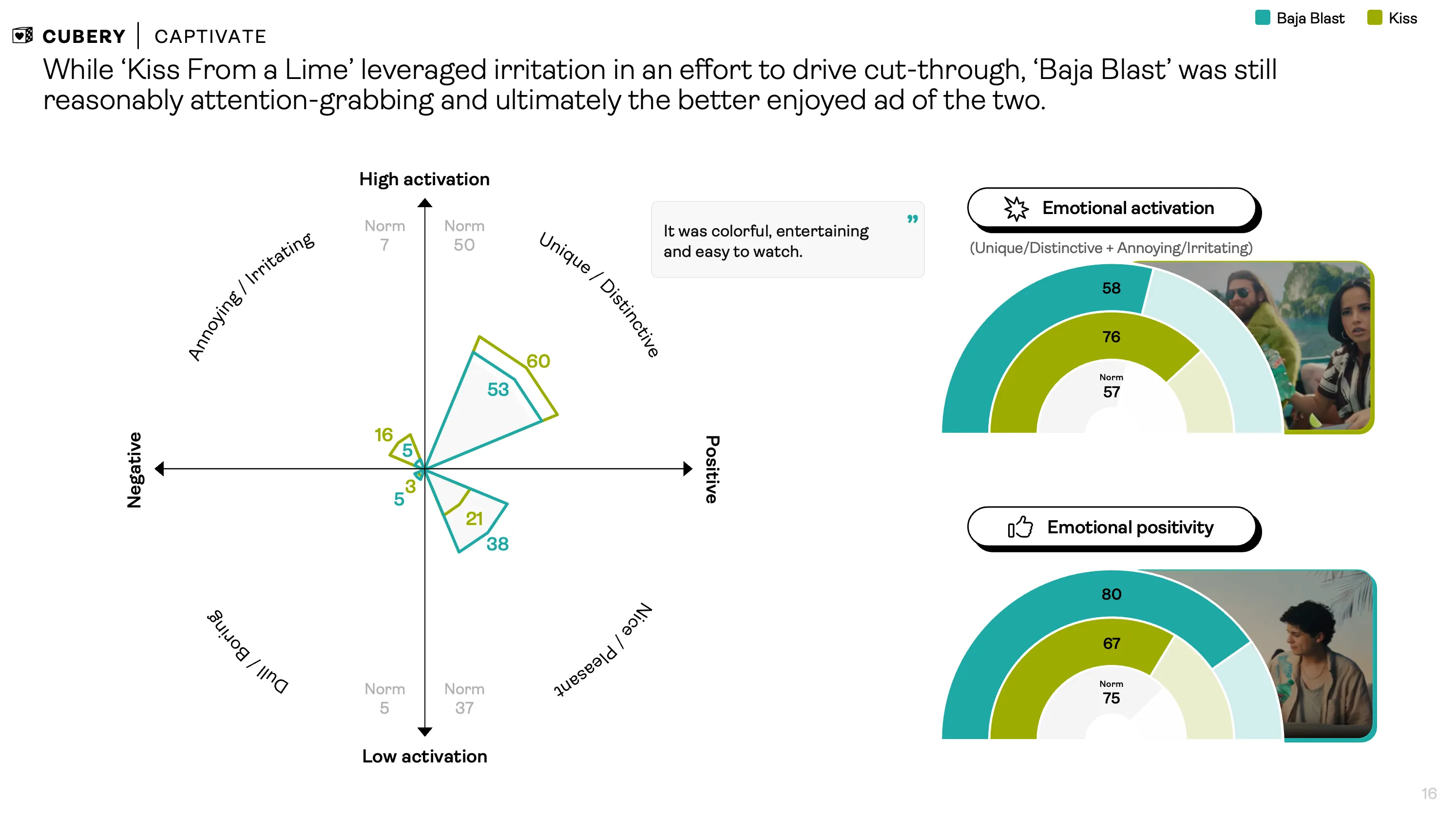
Emotion is central to great advertising; it captures attention, deepens mental processing, and strengthens memory encoding. But as Ehrenberg-Bass Institute professor Jenni Romaniuk puts it, "Emotion is the vehicle, not the destination." In other words, emotion is wasted if people don't remember the brand behind it. That's why creativity and distinctiveness carry equal weighting in our creative effectiveness framework, with our flagship measures (Cubery Rating and Surge Index) predicting an ad’s likelihood to drive short-term sales and long-term brand growth.

Emotion is central to great advertising; it captures attention, deepens mental processing, and strengthens memory encoding. But as Ehrenberg-Bass Institute professor Jenni Romaniuk puts it, "Emotion is the vehicle, not the destination." In other words, emotion is wasted if people don't remember the brand behind it. That's why creativity and distinctiveness carry equal weighting in our creative effectiveness framework, with our flagship measures (Cubery Rating and Surge Index) predicting an ad’s likelihood to drive short-term sales and long-term brand growth.

Emotion is central to great advertising; it captures attention, deepens mental processing, and strengthens memory encoding. But as Ehrenberg-Bass Institute professor Jenni Romaniuk puts it, "Emotion is the vehicle, not the destination." In other words, emotion is wasted if people don't remember the brand behind it. That's why creativity and distinctiveness carry equal weighting in our creative effectiveness framework, with our flagship measures (Cubery Rating and Surge Index) predicting an ad’s likelihood to drive short-term sales and long-term brand growth.


The creative research industry is plagued by fragmented systems and inconsistent methodologies, rendering valuable insights trapped in silos. Still to this day, the primary deliverable from most ad testing continues to be a static report, built to inform short-term decision making. But that means brands have no way to connect the dots between tests, leaving them unable to build cumulative learnings and lasting institutional knowledge. As a result, brands are missing out on half the value of investing in creative research in the first place. At Cubery, we’ve reimagined creative measurement for the AI era.
As Mark Ritson often says, “don’t take your cupcakes out of the oven too early.” It’s a reminder that great brands aren’t built by constantly reinventing the wheel; they’re built by giving ideas the time to develop and mature. Our platform has been built to transform every test from a static snapshot into a compounding growth engine. Every ad contributes to a continuously growing body of evidence. Instead of rediscovering what works with every new campaign, teams deepen their knowledge of what has consistently driven effectiveness over time.
No matter how quickly technology and AI evolve, the most transformational creative insights will continue to be driven by human judgement and experience. Creative data is complex. Surface-level results rarely tell the full story. Without expert interpretation, it’s easy for the wrong conclusions to be drawn and costly mistakes made. That’s why our team of creative effectiveness experts partner with you every step of the way, delivering fully tailored reporting for every project – not a cookie-cutter, AI-generated output devoid of any insight.
From TV and digital to social, audio, outdoor, and beyond, we can test creative across every channel in your media mix. By applying the same rigorous methodology to every format, we’re the only platform where you can compare cross-channel performance on a like-for-like basis. Benchmark test results against channel-specific and country-specific norms, so you can quickly identify your strongest performing creatives and optimize media investment.
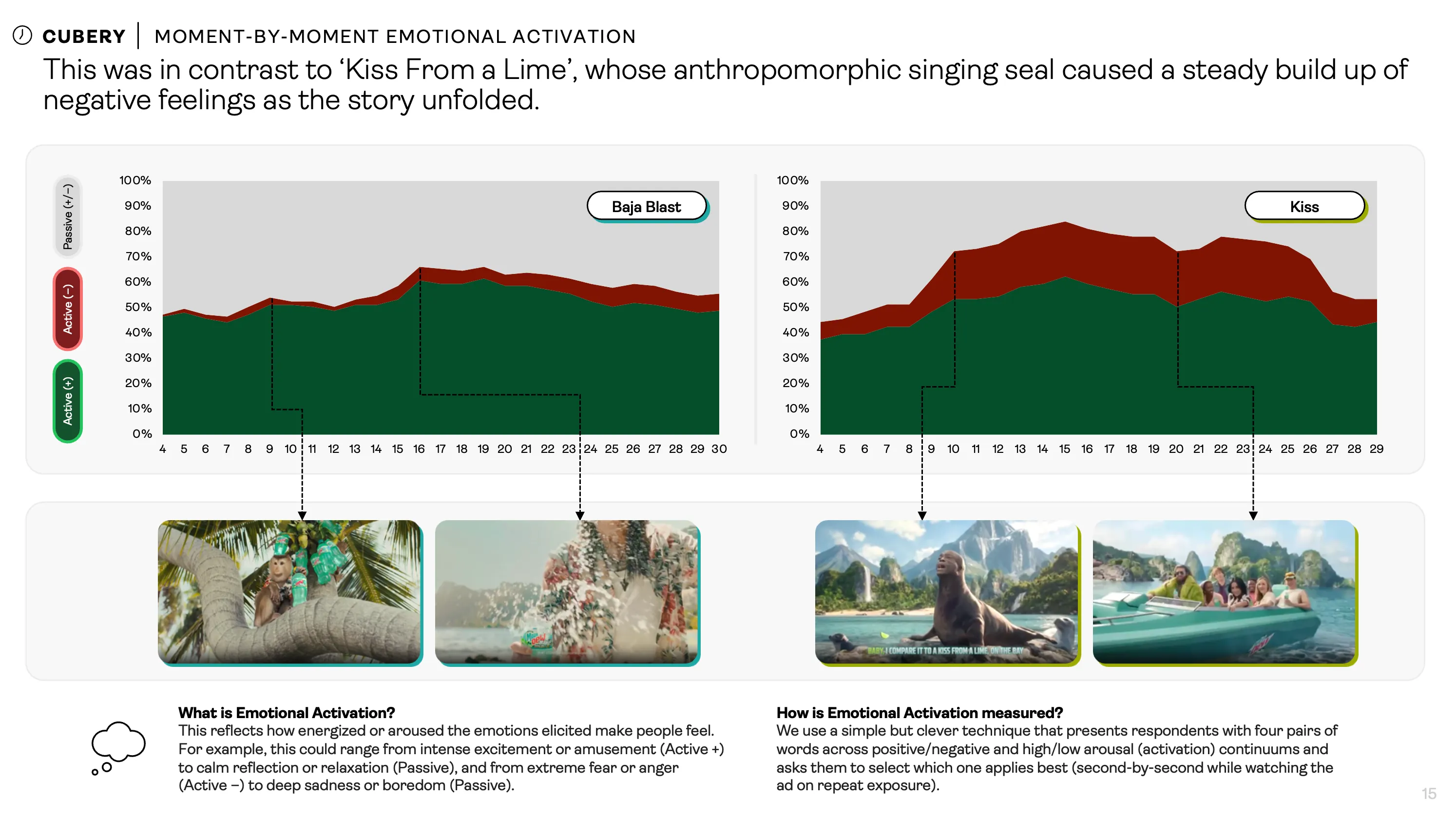
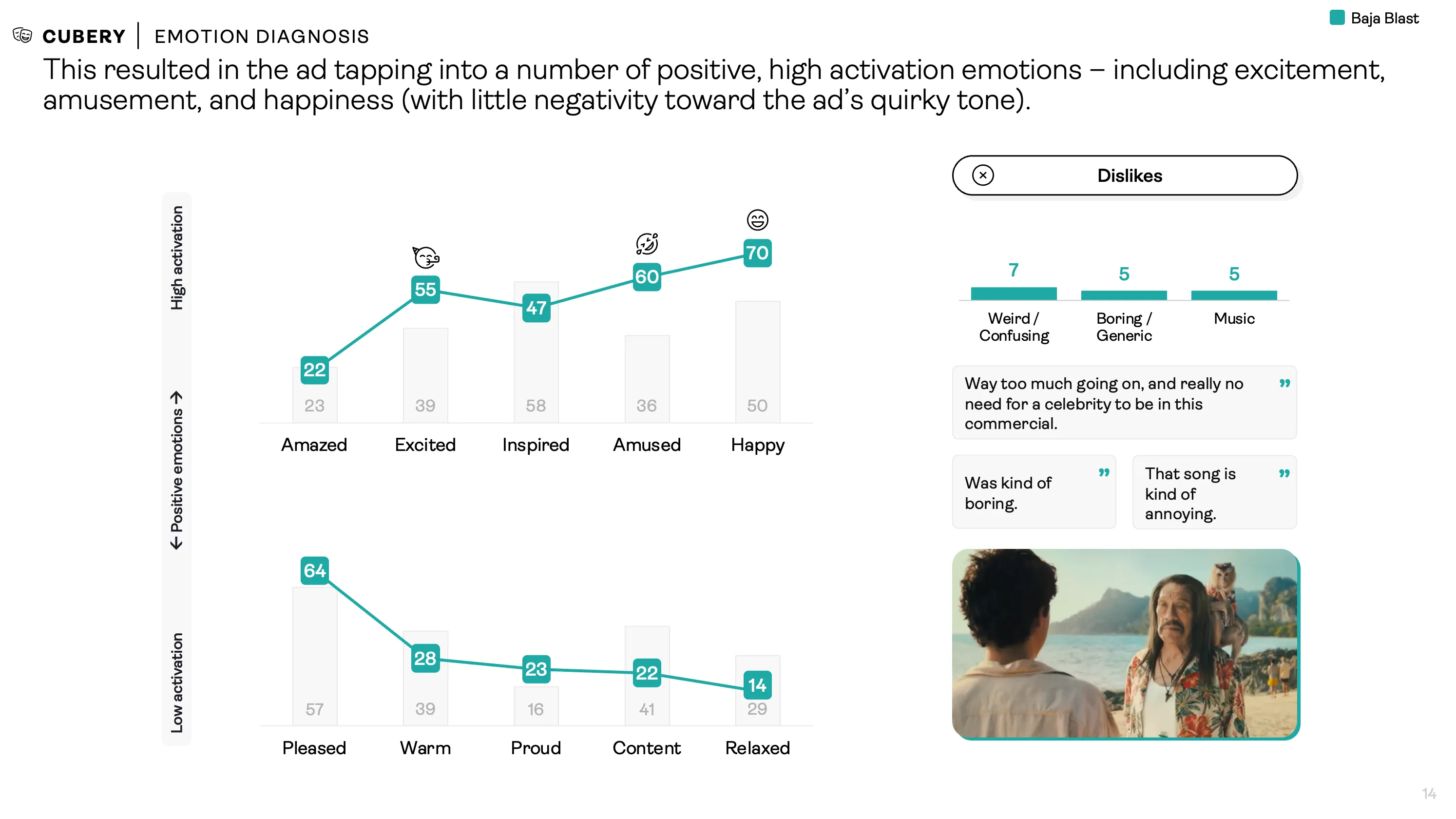
Our pricing is simple, transparent, and flexible, starting at just $2,250/£1,750. With three levels of analysis to choose from, you’re able to select the right depth of insight on a test-by-test basis. Every project includes a tailored report along with dashboard access in perpetuity, giving your accumulated creative intelligence a permanent home. For video tests you’ll also receive our flagship moment-by-moment emotional activation analysis, revealing how the ad makes people feel in real time – helping pinpoint exactly what is and isn’t driving engagement.
Whether it’s an early-stage concept, rough storyboard, animatic, or finished film, we can test and track creative effectiveness at any point in the development lifecycle. Get fast, actionable feedback to validate creative and media decisions prior to launch, helping reduce risk and minimize wasted spend. Easily compare performance versus industry benchmarks, the brand’s creative history, competitor activity, and global best-in-class work. At every stage of the development process your results will be benchmarked against the industry’s most robust norms.
Our team can have your project up and running within minutes. Results will be available in your dashboard from just 6 hours, and a fully tailored report delivered within 2-3 business days. We allow you to validate more ideas, optimize creative with certainty, and make faster, commercially informed decisions at every stage of the development process – without disrupting tight production timelines. Best of all, our metrics are simple and intuitive, becoming the shared language for creative effectiveness across the business. Because research should accelerate great ideas, not stifle them.

“The Desk Break” struck an emotional chord by channeling Logan Roy–style fury to dramatize everyday burnout, making Asics’ message about mental wellbeing both memorable and relatable.
Asics case study

Starbucks’ “Hello Again” celebrated human connection by bringing back the brand’s personal touch—showcasing baristas and expertly crafted coffee. It’s a lively reminder of everything customers know and love about Starbucks.
Starbucks case study

Reese’s “Don’t Eat Lava” cleverly used humor to warn people about the perils of real lava—while playfully promoting their Chocolate Lava Big Cups as the only molten indulgence worth savoring.
Reese's case study
Which ideas, concepts or territories have the most potential?
How can early cuts be optimized prior to final editing?
Is the ad strong enough to run? How should we plan our media?
Can the ad be run again? How does it perform in other markets?
Is the ad getting noticed? Is creative efficiency declining over time?
Read our guide to early-stage creative testing
.png)

.png)


Diagnose includes all Evaluate metrics, plus:


Optimize includes all Evaluate & Diagnose metrics, plus: